
 Java & Init Spike Optimization
Cut Java Cost Without Performance Tradeoffs
JVM workloads need significantly different CPU and memory at startup than at steady state. PerfectScale continuously analyzes and dynamically right-sizes pods for both, without restarts, manual tuning, or performance tradeoffs.
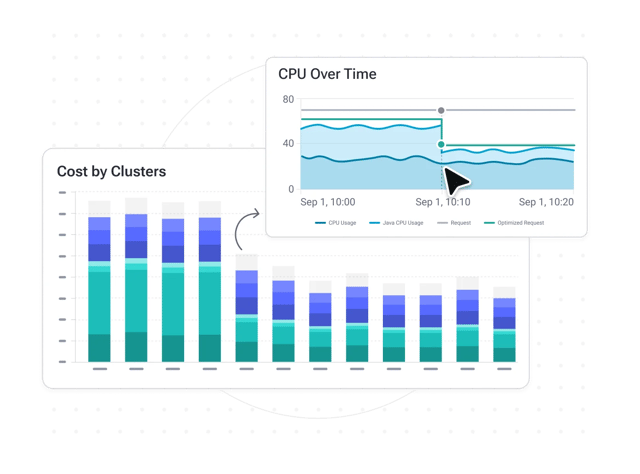
Java Workloads Don't Have One Resource Profile

Startup needs spike
JVM-based services often need significantly more CPU and memory during startup, then keep that extra capacity long after they're up and running.

One size doesn't fit both
Size for the startup spike and waste resources for the rest of the pod's life. Size for steady state and risk throttling or OOM kills at startup.

Manual tuning doesn't scale
Manually tuning startup and steady-state resources is repetitive, risky, and not anyone's full-time job.
Java Optimization with PerfectScale
Automatically size Java workloads to actual utilization during startup, then continuously adjust resources to match steady-state demand.

Startup Safety Without Runtime Waste
JVM-based services often need significantly more CPU and memory during startup, then keep that extra capacity long after they're up and running.

Continuous, Automatic Right-sizing
Moves every pod from startup to steady-state resources automatically via in-place resize. No restart, no manual tuning.

Safety Built Into Automation
Understands which changes are safe for each framework to avoid performance risks, such as OOM crashes.

Visibility Follows Every Change
Tracks resource changes for every workload revision, and shows the impact on usage, waste, and savings.
Java Resource Sizing: The Cost of Getting It Wrong
Java resource sizing means balancing cost and reliability: too little capacity risks performance, while too much increases cost.
Engineering & reliability
- Pending pods and scheduling failures when startup needs more resources than the node can provide
- Throttling or OOM kills when steady-state sizing can't cover the startup spike
- Crash loops and failed rollouts when a new version increases resource demand
Business & cost
- Paying for peak capacity that each replica needs for only a few minutes, creating ongoing waste
- Waste multiplies across services, pods, and clusters
- Outdated sizing creates new waste every time a release changes workload demand
Built for Teams Running Java on Kubernetes
Java optimization pays off differently depending on who's looking at the bill versus who's on call.
Platform, DevOps & SRE Teams
Stop choosing between permanent over-provisioning and hand-tuning startup vs. steady-state resources yourselves.
Engineering Leadership
See infrastructure cost and reliability improve together, without a manual tuning project to get there.
Cut Java Costs Without the Tradeoffs
Automatically match JVM resources to actual demand, without compromising performance or your cloud bill.
Frequently asked
questions
Why do Java workloads need different resources at startup than at steady state?
The JVM does most of its heavy lifting in the first minutes of a pod's life: class loading, JIT compilation, and framework initialization (for example Spring Boot) all drive a short, sharp spike in CPU and memory. Once warmed up, the same container typically runs on a fraction of that. A single static request value can't be right for both phases.
How does PerfectScale size Java pods for both phases?
PerfectScale analyzes real utilization for each container and produces two recommendations: one for the startup phase and one for the runtime phase. Pods start with enough headroom to initialize safely, then PerfectScale moves them to steady-state resources automatically.
Does moving a pod from startup to steady-state resources require a restart?
No. PerfectScale uses Kubernetes in-place pod resize to adjust CPU and memory on the running pod, so there is no restart, no eviction, and no disruption to traffic.
How does PerfectScale avoid OOM kills or throttling when it lowers resources?
Recommendations are framework-aware and built from observed behavior, not static rules. PerfectScale only applies changes it has determined are safe for that workload, keeps a reliability buffer, and tracks the impact of every change on usage, waste, and savings so you can see the result for each workload revision.