
Riduca i costi di Kubernetes senza compromessi
Riduca la spesa rapidamente preservando resilienza, disponibilità e prestazioni delle applicazioni.

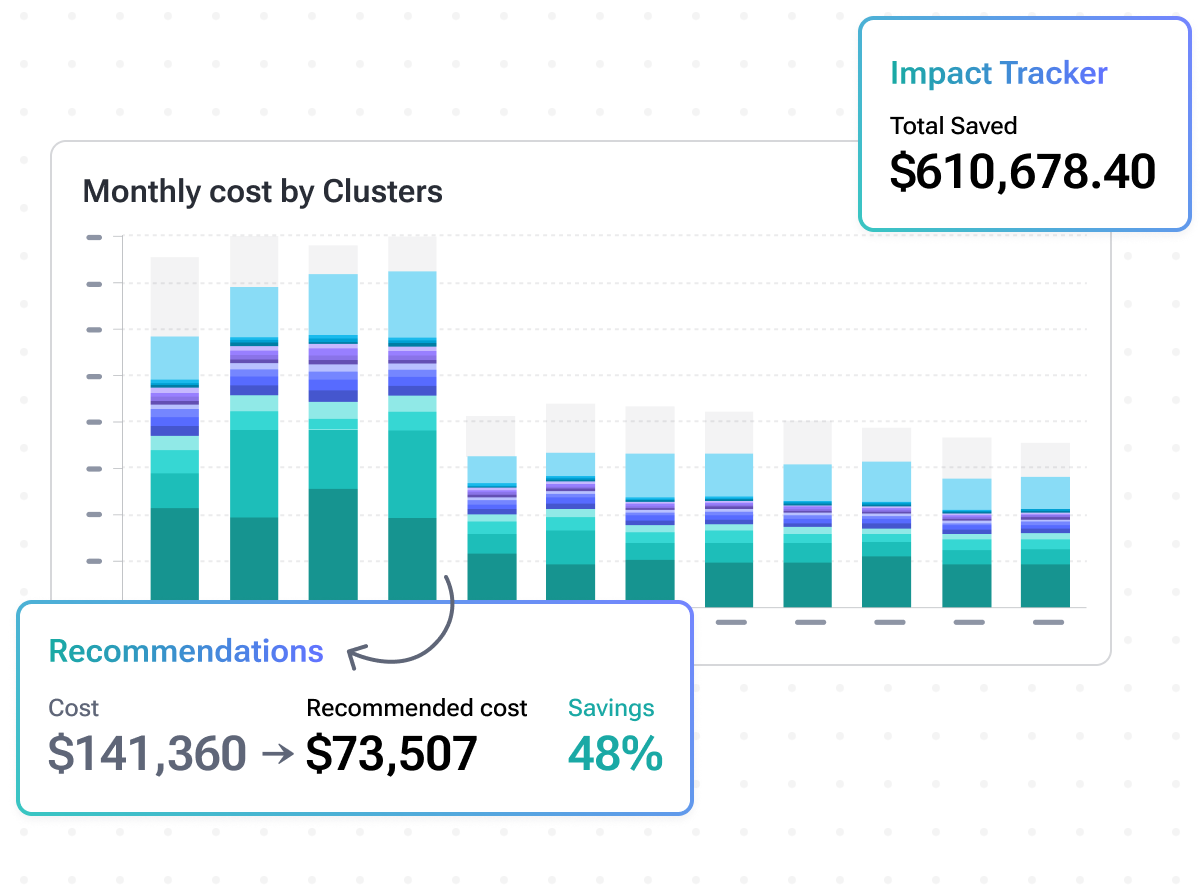
ottimizzazione automatizzata dei costi kubernetes
Right-sizing autonomo dei workload
Ottenga un'ottimizzazione continua e in tempo reale dei workload, capace di adattarsi ai pattern di utilizzo, alle configurazioni di nodi e autoscaling e alle modifiche del codice, eliminando gli sprechi senza compromettere le prestazioni.
- Compatibile con HPA e KEDA: Potenzi la configurazione di scaling orizzontale con un'integrazione perfetta dell'automazione.
- Riconoscimento delle revisioni: Ottimizzi dinamicamente le configurazioni dei workload, adattandole a ogni nuova release del codice.
- Supporto completo dei workload: Inclusi workload personalizzati come Spark, Flint, Rollouts e altri.
Riduzione del numero di nodi
Sfrutti una visibilità granulare sull'utilizzo dei nodi e informazioni concrete su cui agire per ottimizzare i nodi e ridurre le dimensioni del suo ambiente.
- Integrazione perfetta con i node autoscaler: Migliori all'istante l'efficacia del suo autoscaler, come Karpenter o Cluster Autoscaler.
- Visibilità olistica sull'utilizzo dei nodi: Identifichi rapidamente la capacità inattiva dei nodi, selezioni il tipo di nodo corretto e ottimizzi le configurazioni.
- Binpacking migliorato: Ottimizzi lo scheduling dei pod per ridurre lo spreco di risorse dei nodi.
Tuning di K8s senza attriti
Collabori con i team di R&D e di architettura per semplificare le operazioni su K8s, con un'ottimizzazione continua che non compromette le prestazioni.
- Policy di ottimizzazione dinamiche: Controlli su larga scala il costo e il livello di servizio desiderati per ogni workload grazie a una gestione flessibile delle policy.
- Configurazione flessibile dell'automazione: Definisca le policy di automazione più adatte alle esigenze della sua applicazione.
- Integrazione con i workflow esistenti: Colleghi gli strumenti di collaborazione, ticketing e observability già in uso, tra cui Slack, MS Teams, Jira, DataDog, Grafana e altri.
Visibilità completa sui costi di K8s
Ottenga una visione completa delle spese K8s in tutti gli ambienti. Comprenda i trend e preveda i costi futuri con una precisione e una chiarezza senza pari.
- Visibilità accurata dei costi: Monitori i costi nel tempo con suddivisioni dettagliate per cluster, namespace e workload.
- Tecniche avanzate di allocazione dei costi: Utilizzi il raggruppamento flessibile dei workload per controllare i costi di Kubernetes a livello di team, sottosistema o ambiente.
- Allineamento con gli obiettivi FinOps: Confronti metriche di costo e prestazioni per garantire che ogni euro speso sia giustificato.
Scopra il vantaggio PerfectScale
PerfectScale si distingue per il suo approccio unico all'ottimizzazione dei costi. La nostra piattaforma è progettata per offrire risultati in modo rapido ed efficiente.
Ampio supporto cloud
AWS, Azure, Google, OpenShift, Rancher e private cloud.
Insight di ottimizzazione full-stack
Container, workloads e nodi coperti end-to-end.
Ottimizzazione autonoma dei workload
Right-sizing continuo senza interventi manuali.
Integrazioni per alert e ticketing
Si connette a Slack, MS Teams, Jira e altri strumenti.
Visibilità e reporting completi sui costi
Monitori e preveda i costi in ogni ambiente.
Integrazioni perfette con gli autoscaler
HPA, KEDA, Karpenter e Cluster Autoscaler.
Applicazione delle policy di ottimizzazione
Governi costi e livelli di servizio su larga scala.
Insight predittivi sui costi
Preveda la spesa futura con precisione.
Raggruppamenti personalizzati
Allochi i costi per team, sottosistema o ambiente.
Visibilità sull'impronta di carbonio
Monitori la sostenibilità insieme alle metriche di costo.
Perché i team scelgono PerfectScale
Gestisca cluster efficienti sul piano dei costi, affidabili e pronti a scalare.
Frequently asked
questions
Che cos'è l'ottimizzazione dei costi di Kubernetes?
L'ottimizzazione dei costi di Kubernetes è il processo continuo che allinea le risorse del cluster alle reali esigenze dei workload per eliminare gli sprechi, migliorare l'efficienza e ridurre in modo sicuro la spesa cloud, senza compromettere le prestazioni.
Come si ottimizzano i costi di Kubernetes?
PerfectScale analizza continuamente i suoi cluster Kubernetes, inclusi i pattern di utilizzo delle risorse e le configurazioni, e fornisce raccomandazioni di right-sizing dei workload basate sui dati, oppure le applica in modo autonomo per ottenere risultati immediati. Offre inoltre raccomandazioni operative a livello di nodo per selezionare i nodi più adatti ai workload, consentendo ai team di migliorare il bin-packing e, in ultima analisi, ridurre le dimensioni dell'ambiente.
Qual è la differenza tra ottimizzazione dei costi e riduzione dei costi?
La riduzione dei costi si concentra sull'abbassamento delle spese, spesso attraverso azioni a breve termine che diminuiscono la spesa. L'ottimizzazione dei costi, invece, consiste nel costruire processi, governance e automazione adeguati per intraprendere continuamente azioni accurate che bilancino il valore di business con l'efficienza dei costi. Genera risparmi sostenibili garantendo al contempo prestazioni, affidabilità e scalabilità.