
Reduzieren Sie Ihre Ausgaben schnell und erhalten Sie dabei Resilienz, Verfügbarkeit und Anwendungsperformance.

Automatisierte Kubernetes-Kostenoptimierung
Autonomes Workload-Right-Sizing
Profitieren Sie von kontinuierlicher Workload-Optimierung in Echtzeit, die sich an Nutzungsmuster, Node- und Autoscaling-Konfigurationen sowie Code-Änderungen anpasst – und Verschwendung eliminiert, ohne die Performance zu beeinträchtigen.
- Kompatibel mit HPA und KEDA: Verbessern Sie Ihre horizontale Skalierung durch nahtlose Automatisierungsintegration.
- Revision Awareness: Workload-Konfigurationen werden dynamisch optimiert und passen sich jedem neuen Code-Release an.
- Umfassender Workload-Support: Inklusive Custom Workloads wie Spark, Flint, Rollouts und mehr.
Reduzierung der Node-Anzahl
Nutzen Sie granulare Einblicke in die Node-Auslastung und umsetzbare Erkenntnisse, um Nodes zu optimieren und Ihre Umgebung zu verkleinern.
- Nahtlose Node-Autoscaler-Integration: Steigern Sie sofort die Effektivität Ihres Autoscalers, etwa Karpenter oder Cluster Autoscaler.
- Ganzheitliche Sicht auf die Node-Auslastung: Identifizieren Sie ungenutzte Node-Kapazitäten, wählen Sie den passenden Node-Typ und optimieren Sie Konfigurationen.
- Besseres Binpacking: Optimieren Sie das Pod-Scheduling, um ungenutzte Node-Ressourcen zu reduzieren.
Reibungsloses K8s-Tuning
Arbeiten Sie eng mit R&D- und Architektur-Teams zusammen und optimieren Sie Ihren K8s-Betrieb kontinuierlich – ohne Abstriche bei der Performance.
- Dynamische Optimierungsrichtlinien: Steuern Sie Kosten und Service-Level jedes Workloads in großem Maßstab über flexibles Richtlinienmanagement.
- Flexibles Automatisierungs-Setup: Definieren Sie Automatisierungsrichtlinien, die optimal zu den Anforderungen Ihrer Anwendung passen.
- Integration in Ihre bestehenden Workflows: Verbinden Sie Ihre vorhandenen Collaboration-, Ticketing- und Observability-Tools – darunter Slack, MS Teams, Jira, DataDog, Grafana und mehr.
Volle Transparenz über Ihre K8s-Kosten
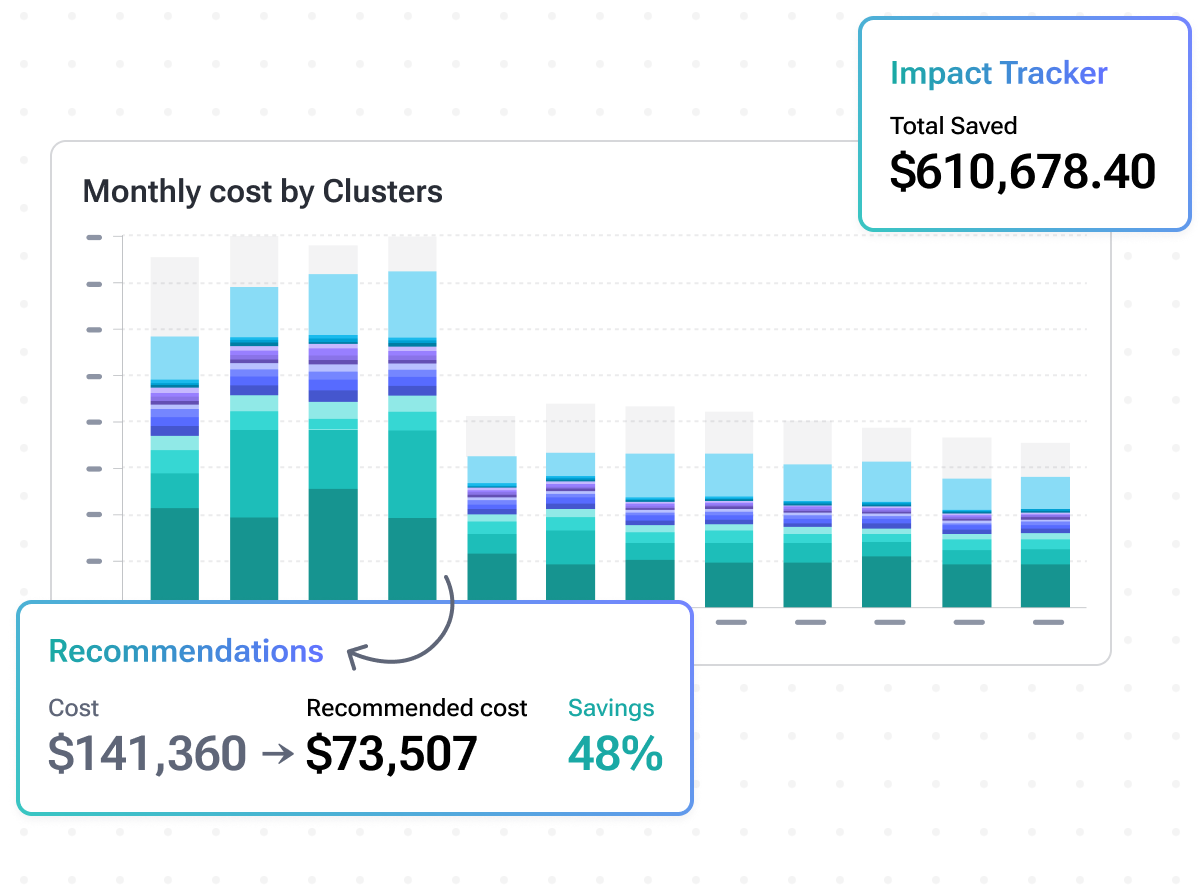
Verschaffen Sie sich einen umfassenden Überblick über Ihre K8s-Ausgaben in allen Umgebungen. Erkennen Sie Trends und prognostizieren Sie künftige Kosten mit beispielloser Klarheit.
- Präzise Kostentransparenz: Verfolgen Sie Kosten im Zeitverlauf mit detaillierten Aufschlüsselungen nach Cluster, Namespace und Workload.
- Fortschrittliche Kostenzuordnung: Nutzen Sie flexible Workload-Gruppierungen, um Kubernetes-Kosten auf Team-, Subsystem- oder Umgebungsebene zu steuern.
- Im Einklang mit Ihren FinOps-Zielen: Vergleichen Sie Kosten- und Performance-Metriken, damit jeder ausgegebene Euro gerechtfertigt ist.
Entdecken Sie den PerfectScale-Vorteil
PerfectScale überzeugt mit einem einzigartigen Ansatz zur Kostenoptimierung. Unsere Plattform liefert schnell und effizient Ergebnisse.
Breite Cloud-Unterstützung
AWS, Azure, Google, OpenShift, Rancher und Private Cloud.
Optimierungs-Insights über den gesamten Stack
Container, Workloads und Nodes – durchgängig abgedeckt.
Autonome Workload-Optimierung
Kontinuierliches Right-Sizing ohne manuelles Eingreifen.
Alert- und Ticketing-Integrationen
Anbindung an Slack, MS Teams, Jira und mehr.
Umfassende Kostentransparenz und Reporting
Kosten in allen Umgebungen verfolgen und prognostizieren.
Nahtlose Autoscaler-Integrationen
HPA, KEDA, Karpenter und Cluster Autoscaler.
Durchsetzung von Optimierungsrichtlinien
Kosten und Service-Level in großem Maßstab steuern.
Prädiktive Kosteneinblicke
Zukünftige Ausgaben präzise prognostizieren.
Individuelle Gruppierung
Kosten nach Team, Subsystem oder Umgebung zuordnen.
Transparenz beim CO₂-Fußabdruck
Nachhaltigkeit zusammen mit Kostenmetriken im Blick behalten.
Warum Teams sich für PerfectScale entscheiden
Betreiben Sie Cluster, die kosteneffizient, zuverlässig und jederzeit skalierbar sind.
Frequently asked
questions
Was ist Kubernetes-Kostenoptimierung?
Kubernetes-Kostenoptimierung ist der kontinuierliche Prozess, Cluster-Ressourcen am tatsächlichen Bedarf der Workloads auszurichten – um Verschwendung zu eliminieren, die Effizienz zu steigern und Cloud-Ausgaben sicher zu senken, ohne die Performance zu beeinträchtigen.
Wie optimiert man Kubernetes-Kosten?
PerfectScale analysiert Ihre Kubernetes-Cluster kontinuierlich – einschließlich Ressourcennutzungsmustern und Konfigurationen – und liefert datenbasierte Right-Sizing-Empfehlungen für Ihre Workloads oder setzt diese autonom um, für sofortige Ergebnisse. Zusätzlich erhalten Sie umsetzbare Empfehlungen auf Node-Ebene, um die passenden Nodes für Ihre Workloads auszuwählen, das Binpacking zu verbessern und letztlich die Umgebung zu verkleinern.
Was ist der Unterschied zwischen Kostenoptimierung und Kostensenkung?
Kostensenkung konzentriert sich darauf, Ausgaben zu verringern – oft durch kurzfristige Maßnahmen. Kostenoptimierung bedeutet dagegen, die richtigen Prozesse, Governance-Strukturen und Automatisierungen aufzubauen, um kontinuierlich präzise Maßnahmen zu ergreifen und Geschäftswert mit Kosteneffizienz in Einklang zu bringen. So entstehen nachhaltige Einsparungen bei gleichzeitig gewährleisteter Performance, Zuverlässigkeit und Skalierbarkeit.